Helping elderly relatives prepare for assisted living: Be prepared!

(This is not my normal content on this blog, obviously, but I didn’t want to start a whole new blog just for this post.)

Hey everybody, I am a Gen Xer currently helping my parents get ready to go into assisted living. I also work at Public Aid, so I get to see some of the behind-the-scenes parts of the Medicaid process. I’ve learned a lot in the process. It’s massively a pain-in-the-ass, even if your parents are willing and ready to make that next step. I wanted to share what I have learned, so hopefully you won’t have to go through as much pain and trauma as I’ve seen others go through.

None of this information is secret or “insider information”. It’s all publicly available on various state and government websites. However, most people don’t think about elder care until the last minute, and once the time to help elderly relatives comes, people are usually at a loss as to what to do. I’ve had estranged or otherwise uninformed children of elderly parents show up at our office to apply for long term care and expect that their parent will find a bed that week, and it just doesn’t happen. In a lot of really important ways, it’s too late to do much of anything at that point except take what you’re given. I know no one wants to think about this stuff, but honestly–it’s best to plan ahead. This is going to be a long article, and it will probably make you sad and/or mad, so be prepared.

A couple of caveats: I only know about the Medicaid side of things; I don’t know a thing about financial investments or taxes or anything like that. Also, with the way things are going with the Federal government right now, I have no idea what Medicaid will look like this time next year, much less five or ten years from now. That said…

The Two Types of Elderly Individuals

In the course of my job, I have noticed that there are really only two types of elderly people in America. There are those who can afford to pay for elder care/assisted living facility out of pocket, and those who can’t. The end. Correspondingly, there are only real two categories of elder care: “Assisted Living Facilities”, where everything is paid out of pocket; and “Supportive Living Facilities (SLF)”, where at least some portion of the bill is picked up by the US government via the State Medicaid system. (There are also Department of Aging (DoA) services, offered through Medicaid, which aims to help keep people in their homes and out of a facility for as long as possible. Eventually, however, most elderly people will end up in a facility.) And, unless your elderly relative has at bare minimum $300K in combined resources and/or monthly income (in today’s money), they don’t have enough to pay out of pocket for Assisted Living. Assisted Living really is that expensive.

Also–one thing to keep in mind for both categories of people: availability. My parents are “Elder Boomers”–they are some of the oldest people of their generation. They are at the very beginning of the biggest generation of people to ever hit the Assisted Living system in America. Our elder care system has never seen the amount of people needing beds as they will be seeing in the next five to ten years. And far as I can tell, the government has failed to prepare for this problem. Facilities take a long time to build, and we should have started building a ton at least ten or fifteen years ago, particularly ones supported by Medicaid. However, as far as I know, we didn’t–and it’s going to make it increasingly harder to get your elderly relative into any kind of facility.

Here’s the financial and medical pros and cons of both types of facilities.

Assisted Living Facilities

Pros:

–If a person is at an Assisted Living Facility, the State does not care what they do with their assets or income. (From a Medicaid standpoint, at least; as I said, taxes and investments are not my specialty). If they have a lot of monthly income and/or resources, they can probably get into a very nice facility. Congrats! This is a nice position to be in.

–The facility will likely offer different levels of care, from least intensive up to the most intensive level of care a person could need. So, once moved in, they will likely not need to leave.

–There are considerably more Assisted Living Facilities than SLFs, so you will have a much wider selection to choose from. They are purely for-profit.

Cons:

–Assisted Living Facilities can often require several thousand dollars just to get on their waiting list.

–It takes a LOT of money to be in an Assisted Living Facility. Despite what online articles may tell you, in *my* mid-size town in the Midwest, at least, the average lowest monthly cost of an Assisted Living facility is $5000/mo. (Articles about my area state that the average monthly cost is $4345/mo; from recent research I’ve done myself, I disagree.) For any facility, check their website and see what that specific facility charges for various rooms and levels of care. It will almost *always* be higher than what any online article will state. It’s similar to buying a car. The stated price on the ad is always the “starting at” price for the bare-bones smallest room and lowest level of care. The cost most people will actually pay will likely be higher.

Keep in mind that this monthly amount does *not* cover things like Medicare F/health insurance premiums; car payments, car insurance payments or gas; life insurance; or most other “extras” you can think of. So, realistically, I’d round this number up to, say, $6000/mo for a anything resembling their previous standard of living. $6000/mo at 12 months a year = $72,000/year for elder care, BARE MINIMUM. For five years? $360,000. For ten years? $720,000. You get the idea.

So, unless your elderly relative has at last $360,000 in combined income and assets, they will not be able to afford an Assisted Living Facility. When someone runs out of money at an Assisted Living facility, they get kicked out and will have to try to get in an SLF, or hope that a relative can take them in.

Supportive Living Facilities (SLFs)

Pros:

–The State (via Medicaid) will pick up any monthly amount that the elderly person cannot cover themselves. Sounds great, right?

Cons: There are quite a few. Let me list them.

In no particular order:

–Medicaid has resource limits set by the Federal government. Income is good and all, but when it comes to SLFs, resources are the most important factor. (Anyway, if you had a high enough income, you’d be at an Assisted Living Facility, not an SLF.) Currently that limit is $17,500.  (Previously it was $2000 per individual, $3000 for a couple!). Resources include: bank accounts, CDs, IRAs, trust funds, any life insurance policies with a cash value, second homes/property, second cars (the first car is exempt), and any Van Goghs or other items you happen to have that have a large cash value. Pretty much ANYTHING that has a cash value is counted. If your resources are higher than the limit, the state will require that you pay all monthly facility fees out of pocket before Medicaid will kick in. This is called “spending down” your resources and this category of Medicaid is called a “DOA Spenddown–Resources”. (There are other categories of elderly Medicaid, but they do not apply here.)

Note: In addition to “spending down” one’s resources, the individual will have to “spend down” their monthly income. Functionally, this means that the state and facility will take and split all of a person’s monthly income except $120/per person (sometimes only $60/per person depending on the specific state or area). This remaining $120/month is the individual’s, as my Dad likes to say, “coke and hamburger money”; ie, discretionary spending, which will need to cover an individual’s cable bill, internet bill, and any other monthly bill a person has.

–Think you can give away all of your resources in order to avoid this Resource Spenddown? Wrong! The State has what it calls a “five year look-back period” in regards to calculating resources. If a person made any kind of transfer or withdrawal of more than $500/mo at any time within the five years prior to someone going into an SLF, that amount will count against them, and the State will not start paying on the SLF fees until that amount has been made up. This is meant to prevent people from “hiding” assets and getting State assistance paying for the SLF when, in reality, they themselves still have the ability to pay out of pocket. There are very few allowable resources transfers, most of which involve having a disabled adult child to care for. And yes, many banks report monthly balances for all elderly individuals who receive Medicaid, so if an individual doesn’t voluntarily report a resource, the State will likely find out eventually and be very mad.. What is very clearly NOT exempt is giving $ to your children or family members, or giving money to charity. The takeaway:  If you happen to have a large amount of resources, but not enough to pay for your entire Assisted Living experience out of pocket, give that money away at least five years BEFORE you might go into an elder care facility. (For more detailed information, search “Five Year Look Back Period for Medicaid”.)

–SLFs are few and far-between. My area has only three SFLs and over 20 Assisted Living Facilities. As I said, my parents are Elder Boomers—the oldest of the Boomer generation, which is the biggest generation in American history. Spots at SLFs are going to be filling up *fast* in the next few years. Get them on a list as soon as it looks like they may need to move to a facility.

–SLFs do not offer intensive support; Medicaid prevents them from doing so. If a patient needs more than one person assisting them for daily living, or if they become a danger to themselves or others, the State does not allow them to stay at a SLF. instead they will be moved to another facility (usually a nursing home or hospice) that can handle the higher level of care needed. This new facility will likely accept both Medicaid, and therefore the same resource limits will continue to be in place. Many SLFs already have working relationships with the nursing homes and hospices in their area.

Takeaway

The main take-away here is that unless your elderly relatives are rich, they will end up at a SLF. Plan ahead and have them check out different facilities, and get them signed up at whichever one they like best. Beds do not come open very often, so plan ahead and get them on the waiting list. If they have more than five years to spare, try to convince them to start “spending down” their assets now.

This probably the biggest–pardon my language–headfuck of them all in this process. The mindset change needed here to fully grasp their situation is truly staggering. Elderly people have spent more than fifty years thinking that they had to save “for the future”. At this point, the future is here. Credit scores no longer matter, and if they have’t saved at least $300k, for all functional purposes they might as well have not saved anything.)

I reiterate–with all of the current changes to Medicaid, however, some of this may no longer apply in a few years. But if it stays the same, this is the situation many people will be in.
Better Late Than Never–Catching Up with 2024

Well, I have been continuing to garden and preserve food, and last year I also added studying herbalism. So despite what the blog shows, I have actually been very busy.

This year has been a weird one. As the first year of my blgo can attest, I’ve had problems with my knees for a while now. Thats’ actually how this blog got started–Feb 2021 I had a knee surgery which was was supposed to help me put off a total knee replacement. The recovery for it involved me having to keep all of my weight off of my knee for 6 weeks–right at the beginning of my first real year of gardening at my new house. I felt stymied, and poured out my frustration into the blog and a somewhat embarrassing number of excel spreadsheets.

Skip ahead to October 2024, and I finally had to have the dreaded knee replacement. It was kinda a hellish year all around, for a lot of reasons. I did plant a garden and had a successful seedling sale, but my health issues kept my involvement in my garden to much less than I would have liked. Good news is that my surgery went perfectly; I’m recovering well, and, in theory, I should be fit as a fiddle for gardening season 2025.

That said, here are some of my gardening successes in 2024:

My orchard! I now have a veritable small orchard in my .15 acre city lot. Currently I have: two peach trees (one Contender and one Reliant, both of which should be able to survive in our 5b climate); one cherry tree (Romeo, technically a bush variety); and five apple trees (Macintosh, Honeycrisp, Liberty, Arkansas Black, and Whitney–a crab apple that originated here in IL.) I believe that I also have a Cox Orange Pippin (a prized old English variety) on order; if they does end up shipping to us this year, it’ll replace the Arkansas Black, which is kind of a useless apple tree, but it was what was available when I grabbed replacement apple trees in fall of 2023.

My berries! This year my berries really stepped up–the ones planted in the ground, at least. (I’m realizing that anything I try to overwinter in a pot is just not going to be happy. And with the really dry summers we’ve been having, it’s a hassle to keep up with the watering.) The bushes that really took off this year were the Prime Ark Freedom blackberries and the Joan J raspberries. Both are cultivated thornless varieties, so they’re easy to pick. I also had an Anne Gold raspberry bush do well. I had several Double Good raspberry plants in large containers, but they did not do well this year. I’m not entirely in love with the Double Good berries–they can be very prolific, but the taste is just so-so, in my opinion–so I’m not sure if I’m going to plant them in the ground or if I use the ground space for another blackberry or Joan J plant. TBD.

My elderberries! I have two bushes (I’m blanking on the varieties, sorry) which really took off like crazy this year. Last spring they were little 1′ tall plants, which I then planted into the ground in the fall of 2023. This year, they grew a good six feet and I spent the summer trying to keep them from growing into the neighbor’s yard as well. My berry harvest was not huge, but should be enough for one good-sized batch of elderberry syrup. I have high hopes for next year’s crop.

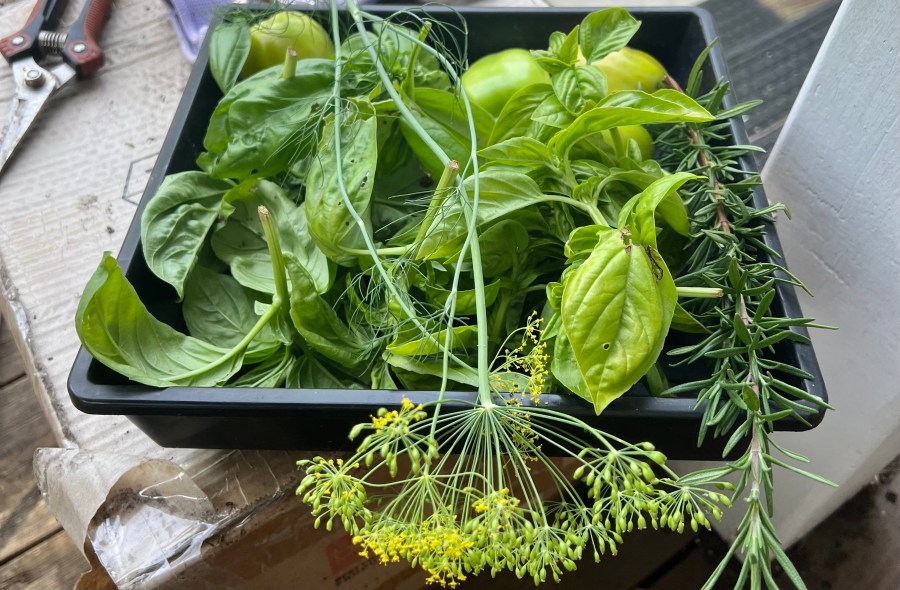
My herbs! In generally my herbs did well this year. I grow both medicinal and culinary herbs, because buying either kind of herb in the store is outrageously expensive. For my culinary herbs, my parsley, thyme, and rosemary did quite well. (I’m still struggling to get cilantro to grow and be ready when I need it.) As for my medicinal herbs, I grew and harvested a bunch of new ones–California poppy, elecampane, skullcap–as well as old favorites such as lemon balm, comfrey, marshmallow, and lavender. I intend to expand this next year as well, just because homegrown is so much tastier and higher in the medicinal compounds than store-bought. It’s just about finding where to put them all 🙂

Well, back to dehydrating and canning. It’s mid-November now, but thanks to an extremely warm fall, my garden is still producing tomatoes….

Garden Successes–Spring 2022

I’m planning out the garden for 2023, so it seemed a good time to reflect back on how last year’s garden went.

Spring’s Successes:

Probably my biggest success in Spring 2022 was my basement nursery. I was able to sow and grow over 200 different varieties of plants in a 4’x5’x2′ area with a few hanging grow lights. The lights (just generic rectangular hanging grow lights, nothing special), plus the heat mats, made all of the difference. I highly recommend them for getting plants started.

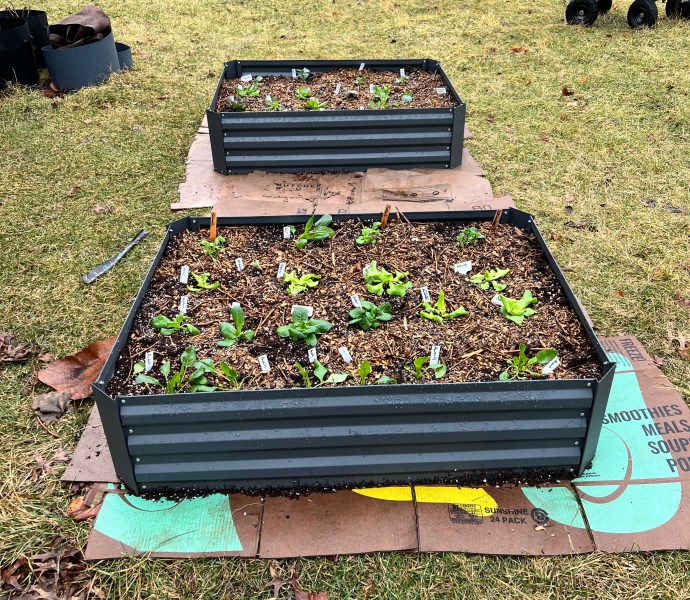
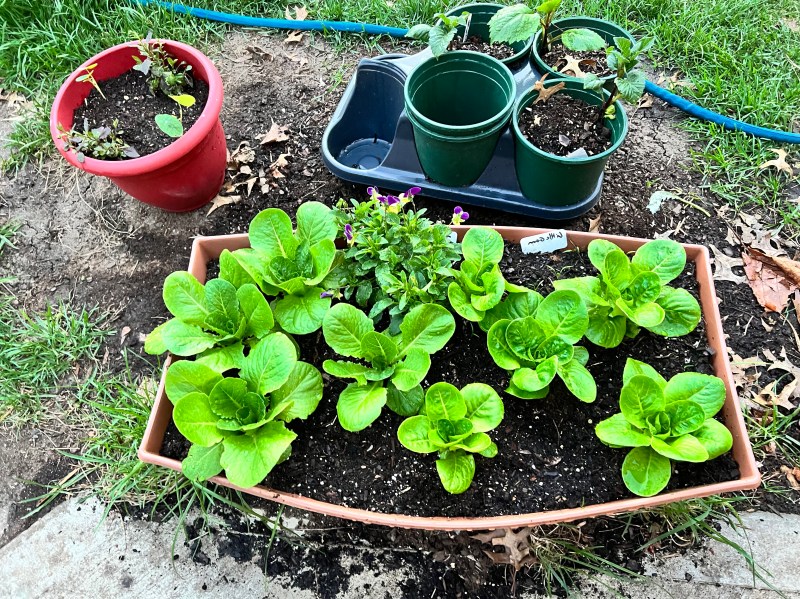
Another big success, which continued through July 2022 were my lettuces. I was growing way more lettuce than anyone could ever need. I even got my parents hooked on the Salanova Red Butter lettuces. Unfortunately my luck with lettuces ran out once the full summer heat kicked back in, and I wasn’t able to regain that same level of success after that. Now that I know that I’m addicted to mini romaine lettuces, my goal is to remain lettuce self-sustaining for all of 2023.

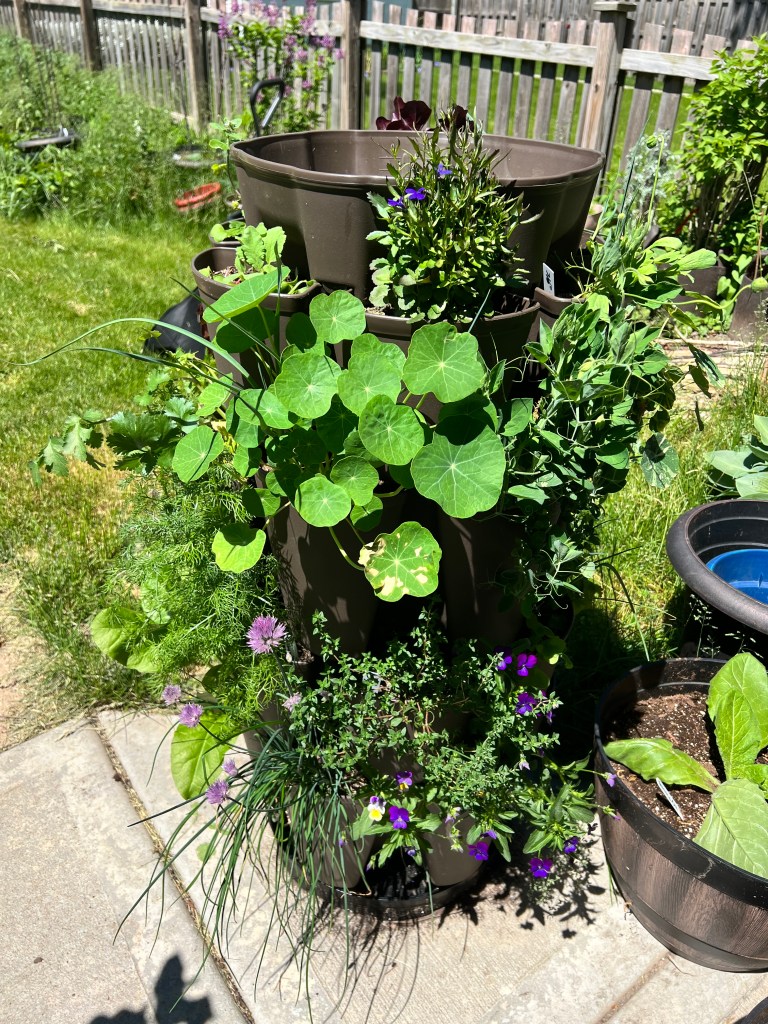
And, just generally, I was very happy with my Greenstalks–especially my new brown one which was set on the sidewalk near the back deck rather than on the deck itself. Once the various plants and herbs on it went to flower, it was really glorious–tons of pale to dark greens with the most delicate little purple flowers from the chives, catnip, thyme, and Thai basil.

My first Greenstalk tour! Spring 2022

Fall Sowing, 2022

The garden has been super busy this summer, and I am barely keeping up. (You know, the usual.) I’m still waiting on my tomatoes, cucumbers, melons, and tomatillos to ripen, and I have already harvested the last of the snap peas and fava beans. Carrot and leek harvesting is ongoing; lettuces come and go depending on how on top of things I am that month. Still, amid all this busyness, I remembered to sow the seeds for my fall garden!

This will be my third year of fall gardening, and I have to say it’s the most relaxing gardening season. By the time fall comes around, all of the tomatoes and tomatillos have been harvested and stored away, and the cucumbers and melons have been eaten, and the onions and winter squash and finishing up. My very successful garlic harvest was this week–a bit later than I had planned, as I ended up being in CA over July 4th. My purple sprouting broccoli has survived the summer so far, but I sowed a few more seeds just in case it doesn’t survive August. The rest of the seeds I sowed are brassicas, with a few late seed purchases and lettuces added in. Here’s the Fall sowing count so far:

Bachelor’s Button, fancy blue hybridunknown
Broccoli, Nine-Star (sprouting, cauliflower)Etsy
Broccoli, BurgundyGurney’s Seeds
Cabbage, TiaraJohnny’s Seeds
Kale, Russian RedBaker Creek
Cabbage, Nero di Toscana (Dinosaur Kale)Baker Creek
Rutabaga, Navone YellowBaker Creek
Turnip, TokinashiBaker Creek
Summer Squash, Costata Romanesco (zuch)Botanical Interests
Lettuce, Little Gem  (romaine)Baker Creek
Lettuce, Parris Island Cos (Romaine)Baker Creek
Lettuce, Salanova Red BavarianJohnny’s Seeds
Lettuce, New Red Fire (leaf)Botanical Interests
Lettuce, Yedikule (romaine)Baker Creek
Lettuce, Winter DensityPinetree Seeds
Beet, Badger FlameHigh Mowing Seeds
Beet, BolthardyPinetree Seeds
Beet, Detroit GoldenBaker Creek
Onion, Ishikura (bunching)Baker Creek

I don’t particularly like kale, but my mother has taken a liking to it as well as my red Salanova lettuces. I’m very excited about the Yedikule lettuce, as I’ve figured out my favorite lettuces are home-grown romaines, and the Yedikule (from someplace in the Middle East, I think) is suppose to have a “greasy” texture, almost as if it already has dressing on it. I prefer to eat my lettuce without dressing, so here’s hoping it’s true! I haven’t grown the Nine-Star Broccoli (which is actually a perennial cauliflower) but it sounds pretty interesting. The Bachelor’s Button is supposed to be a fancy hybrid that is specifically designed to not fall over, which has been my biggest pet peeves with Bachelor’s Buttons so far. I’ve also found green onions to be surprisingly useful, as I’ve found myself harvesting bulb onions early just for their greens.

All in all, I expect it will be a very productive, if low-maintenance, fall garden. Now, I just need to survive the rest of the summer.

What is new in 2022? And, starting to homestead in a suburban lot

This year, despite my best hopes, has become yet another year of intense learning about how best to grow things in my home garden. There are worse things, I know, but I am looking forward to eventually having a calm, uneventful spring in which I already know exactly what I like to grow and how to do so. That day, however, as Aragorn says, is not this day.

I posted on a Facebook garden group I joined a while back about all of the different varieties I had planted just by March of this year. Most members, also addicted to gardening, cheered me on, but a few were shocked. And I thought maybe the amount of plants–about half of which are new to me–may be a tad on the high side.

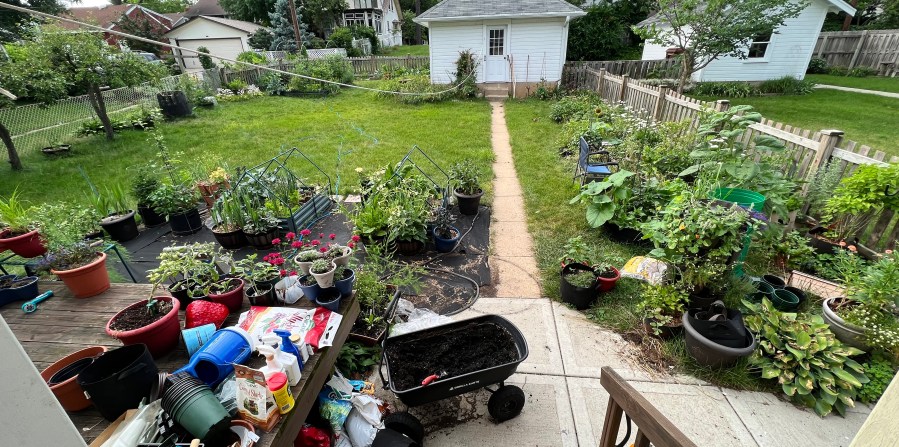
Part of my rush into gardening comes from the fact that, at 44 years old, I had bought a house and could finally do the amount of gardening I’d been dreaming of. Prior to this I had been living in the Bay Area of California, and despite CA being a lovely place to live, it is also extremely expensive, and I knew that I’d never be able to afford the type of house and yard that I wanted. So now I did finally have land–a good-sized yard (.15 total acre for the plot, 2/3s of which is lawn and garden)– in a nice older neighborhood in my hometown. And, boy howdy, was I ready to garden!

Another factor in my gardening obsession is, of course, Covid. I was locked at home for the better part of two years, and even now have the luxury of continuing to work from home. And Covid also brought with it intermittent food shortages and general societal and consumer anxiety, and like many others during this time, I found gardening helped to ease some of that anxiety.

Finally, an unexpected knee surgery in February 2021 literally made me sit down and do nothing for six weeks right before gardening season. I was bored, in pain, and itching with irritation at missing seed starting season again. (We had moved into our house Memorial Day weekend the year before, so that year’s garden started late as well.) So I made up for it by watching approximately a million Youtube videos and buying tons of packets of seeds and canning equipment. Thus the world of commercial flower farming, farmer’s market gardening, and, in particular, homesteading was opened up to me. For over six weeks, I spent most of my waking hours sitting at home watching my videos, and created the most massively detailed, multi-tabbed Excel spreadsheet to help me organize all my gardening plans. As you do.

All that said, here’s a list of new-to-me varieties that I’ve successfully sown this year so far–all 118 of them. All grown from seed unless otherwise noted. Note that these are not all of the varieties I’ve sown, just ones that are new to me this year. Some of the seeds were ones I bought last year but didn’t have any luck with or didn’t get around to sowing. The rest are new this year.

Herbs:
Basil, Emerald Towers
Basil, Cinnamon
Basil, Thai Sweet
Borage, ‘Alba’
Chamomile, Zloty Lan
Cilantro, Santo
Comfrey (from root cutting)
Dill, Bouquet
Dill, Mammoth
Fennel, Dragon F1
Fennel, Florence
Lavender, Munstead (from seed! finally)
Mint, Catnip
Thyme, Garden
Yarrow, White

Flowers:
Alyssum, Dwarf Rainbow Mix
Aster, Salmon Janina
Baby’s Breath
Bachelor’s Button, Classic Romantic 
Dianthus, Sweet William
Gomphrena, Salmon Pastel 
Gomphrena, Carmine
Hibiscus, Red Mahagony
Nicotiana, Jasmine Scented
Pampas Grass, Plume Mix
Phlox, Lavender Beauty
Poppy, Iceland–Pastel Meadows
Rudbeckia, Indian Summer (yellow)
Rudbeckia, Gloriosa Daisy Prairie Sun
Rudbeckia, Goldilocks
Snapdragons, Rocket Mix
Snapdragon, Black Prince
Snapdragon, Tequila Sunrise
Snapdragon, Night and Day
Snapdragon, Magic Carpet Blend 
Strawflower, Apricot
Stock, Anytime Mix
Stock, Sissi “Shades of Blue” Mix
Sweet Pea, Bouquet Blend 
Sweet Pea, High Scent 
Sweet Pea, Knee-Hi Blend 
Sweet Pea, Little Sweetheart
Sweet Pea, Perfume Delight 
Sweet Pea, Royal Blend
Tulip, Darwin Hybrid Blushing Apeldorn
Viola, Brush Strokes 
Viola, Cool Summer Breeze
Zinnia, Queen Lime Red
Zinnia, Queen Lime Lime
Brassicas:
Broccoli, Burgundy
Brussel Sprouts,  Silvia
Chijimisai
Radish, French Breakfast
Radish, Miyashige White Daikon 
Turnip, Tokinashi
Legumes:
Bean, Borlotto Del Valdarno
Fava, Aquadulce 
Fava, Broad Windsor
Snap Pea, Magnolia Blossom Tendril
Cucumbers & Watermelons:
Cucumber, Salad Bush
Cucumber, Chelsea
Melon, Savor F1
Nightshades:
Tomato, Black Strawberry 
Tomato, Cherry Fountain 
Tomato, Hugarian Heart
Tomato, Purple Reign
Tomato, Tappy’s Heritage
Curcurbita (Summer Squash):
Summer Squash, “Avocado”
Summer Squash, Center Cut
Curcurbita (Winter Squash):
Pumpkin, Snowball F1
Winter Squash, Crown Prince (c. pepo)
Winter Squash, Squash 898 (experimental)
Winter Squash, Honeynut (hybrid, moschata/maxima)
Winter Squash, Marina di Chioggia (c. maxima)
ASTERACEAE:
Lettuce, Black Seeded Simpson
Lettuce, Little Gem 
Lettuce, Marvel of Four Seasons Butterhead 
Lettuce, Nancy
Lettuce, Parris Island Cos (Romaine)
Lettuce, Prizehead
Lettuce, Winter Density
CHENOPODIACEAE:
Beet, Detroit Golden
Spinach, Aurochs
Spinach, Gigante d’ Inverno 
Swiss Chard, Verde De Taglio
Swiss Chard, Bietola a Costa Fine
Swiss Chard, Bright Lights Mix
Alliums:
Asparagus, Spartacus (from crowns)
Chives, Common
Garlic, Lorz Italian Heirloom (softneck) (from cloves)
Garlic, Music (hardneck) (from cloves)
Garlic, German Extra Hardy (hardneck) (from cloves)
Leek, Lancelot (starts)
Onion, Alisa Craig
Onion, Sierra Blanca F1
Onion, Rossa di Milano
Onion, Yellow of Parma
Onion, Red Long of Tropea
Onion, Stirling (starts)
Onion, Zebrune Shallot 
Umbellifers:
Carrot, Shin Kuroda
Carrot, Sugarsnax 54 (pelleted)
Carrot, Tendersweet
Carrot, Gold Nugget
Carrot, Napoli
Celery, Chinese Pink Cutting
Fruits (bare root or small plants):
Raspberry, Double Gold
Raspberry, Caroline
Strawberry, Sparkle
Blackberry, Prime Ark® Freedom
Blueberry, Patriot (early season, highbush)
Blueberry, Northland (midseason, highbush)
Blueberry,  Jersey (late season; largest species)
Potatoes/Sweet Potatoes (from seed potatoes):
Potatoes, Red Gold
Potatoes, Purple Viking
Potatoes, Russian Banana
Trees/Bushes (Bare root):
Apple, Fuji Dwarf (Reachables, dwarf)
Peach, Contender (Reachables, dwarf)

February and March 2022: The Gardening Frenzy

As often happens in spring, I’m so busy doing the gardening that I don’t have the time or energy to write about the gardening I’m doing. So, here’s a summary of that’s all gone on the last few weeks.

All spring crops and spring flowers have now been sown. I’ve built two new small raised beds close to the back deck which will serve as my greens bed–several types of lettuce, spinach, and chard, as well as leeks and green onions. Herbs have been planted in my smaller greenstalk, also near the back deck. I planted some broccoli seedlings as well, but the snow/hard freeze we had at the end of March killed them off.) I also broke down and ordered some onions starts from Dixondale Farms when my leeks and other onion seedlings did not seem to be faring well; those are all now planted in my large raised beds farther back in the yard. My various onion, leek, and shallot seedlings are still coming along, and will hopefully be ready to plant out later this month.

As for spring flowers, I’ve had a lot of success with my sweet peas and pansies/violas, as well as my lobelia. My snapdragons, not so much. I put a few out before what turned out ot be a hard freeze, and they did not survive. 😦 On to round 2 of sowing snapdragons.

I also ended up purchasing a bunch of tubers/bare root plants, because I was inundated with a million garden catalogues and I only have so much restraint. I received a great looking bunch of purple viking potatoes from Gurney, but they were so fresh and juicy that when I cut them up, they all got very moldy and I had to toss them. Still chitting up are some french fingerling potatoes and red gold potatoes. Still to arrive are two types of raspberry bushes (most of mine died last year, due to some kind of disease); a trio of blueberry bushes; and some thornless blackberry bushes as well. As none of my asparagus seems to have survived the winter, despite growing very well last year, I also had put in another order of asparagus crowns.

I also picked up a new dwarf Fuji apple tree (“Reachables” variety, from Gurney) because I was finally able to find one in stock! The full-size Fuji apple I’ve tended since last spring will go to a friend with a much bigger yard. I also picked up two bare root yellow roses from Costco at $15 or so a pop, which was a great deal. (The red roses I picked up there last year are all thriving.) And my dahlia tubers are all ordered, but not shipped yet as I’m in Zone 5a/b.

Still to sow are my warm weather crops. This weekend I will finally get my tomatoes, peppers, and tomatillos sown. The flowers and all of my curcurbita crops (melons, cucumbers, squash) will get direct sown in May, as they don’t like to have their roots messed with. Also, I only have so much space left in my grown room in the basement!

Spring is definitely here, and I’m swamped. Hopefully I’ll be able to keep up with the blogging this summer, but no promises. Happy gardening!

One Seed Challenge, 2022

One of the things I picked up from Nicole over at Flower Hill Farm is the idea of the One Seed Challenge (#oneseedchallenge). The main idea with this being that, yes, seeds are cheap, and we usually have many more than we could ever use, but it’s easy in the midst of that to lose the value of the seed itself. Any and every seed could be the start of a beautiful or nourishing plant. One seed could, in time, grow a tree strong enough to take down stone walls, or provide the underlying root structure to that could prevent acres of valuable topsoil from blowing away. Seeds, though many, are powerful on their own.

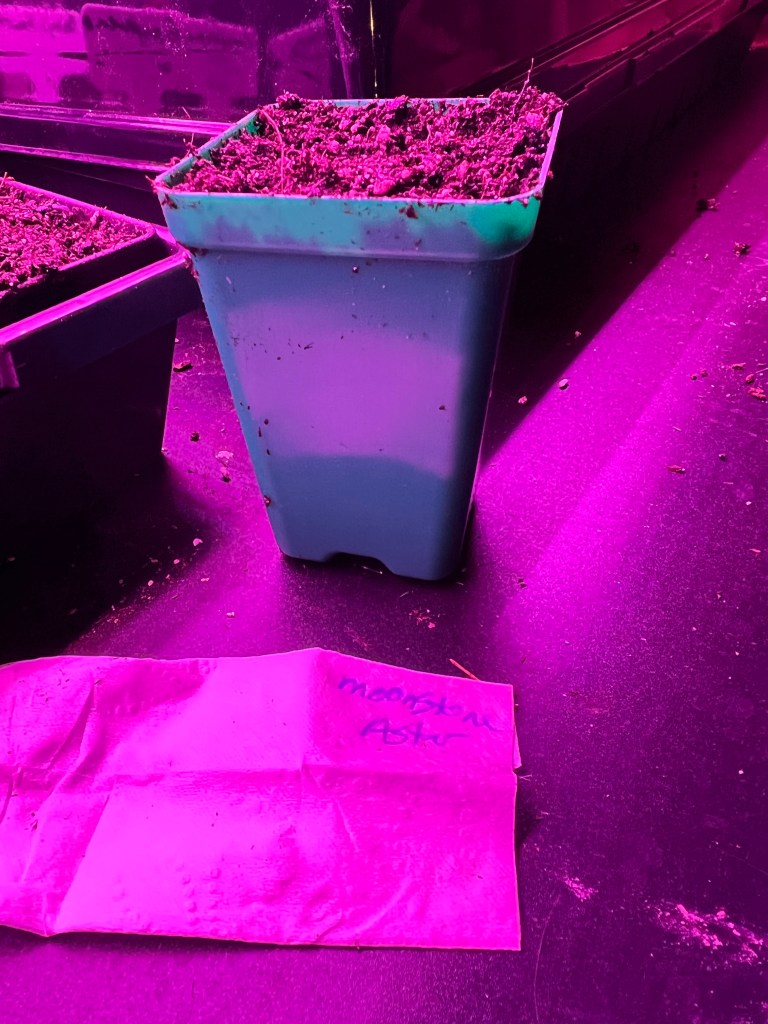
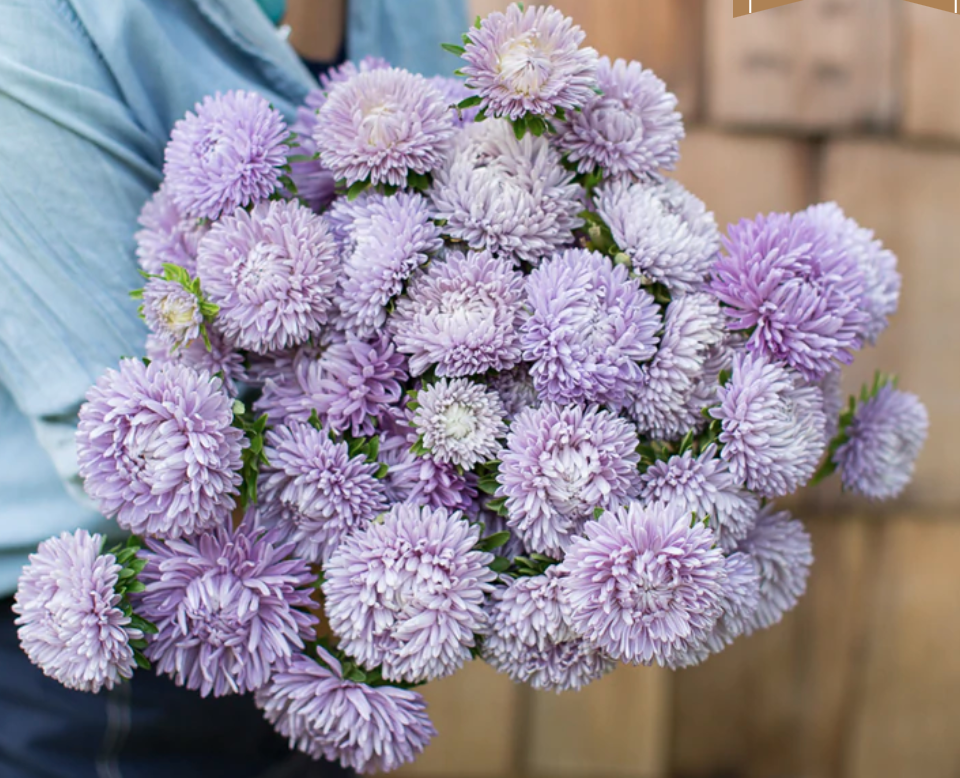
The seed I’m using for this challenge was very generously sent to me from a member of the Flower Hill Farm 2022 Grow-Along FB group. He had a bunch of Floret seeds to pass out, and I received a few Moonstone Aster seeds. I have one planted up now, in the hopes that it will pull through (and not get lost in the hundreds of other seeds I’ll be sowing this spring!) As it is, though I thought I had an almost full packet of aster seeds fromBaker Creek, the packet is missing, so this will be the only aster plant I’m growing this year. The variety–Moonstone–is my favorite color of aster, a dusky lavender. I can’t wait to see it grow!

Seed Sowing, February 2022

Well, this month has almost gotten away with me. I’ve gotten a lot done–the basement greenhouse is finished, and I’ve sown over 50 varieties of plants at last count. I don’t have as much time or energy to blog now that I’m not laid up with a knee surgery. Hopefully this extra mobility will make sowing spring crops much easier!

Here’s what I’ve sown this month:

2/6/22:

Ranunculus, Tomer PurpleLongfield Gardens
Ranunculus, Tomer RedLongfield Gardens
Ranunculus, Tomer WhiteLongfield Gardens

2/8/22:

Poppy, Icelandic–Pastel MeadowsFloret Flowers

2/10/22:

Snapdragon, Madame Butterfly MixedJohnny’s Seeds
Snapdragon, Madame Butterfly B w/ WhiteJohnny’s Seeds
Snapdragon, Night and DayBotanical Interests
Snapdragon, Magic Carpet Blend Botanical Interests
Poppy, Iceland–Pastel MeadowsFloret Flowers
Pepper, Black Pearl (decorative)Botanical Interests
Pepper, Sugar Rush Peach (hot)Baker Creek

2/14/22:

Pansy, Lake of ThunBaker Creek
Pansy, Berna Velvet Blue Baker Creek
Pansy, Swiss Giants Mix Baker Creek
Viola, King Henry Botanical Interests
Viola, Johnny-Jump-Up ViolaBotanical Interests
Viola, Brush Strokes Baker Creek
Viola, Cool Summer BreezeBotanical Interests
Lobelia, Crystal PalaceBotanical Interests
Thyme, GardenSustainable Seeds
Mint, Green Lemon BalmBaker Creek
Mint, CatnipBaker Creek
Cilantro, Slo-BoltMI Gardener
Cilantro, SantoJohnny’s Seeds
Bok Choy, Purple Lady Baker Creek
Cabbage, KalibosBaker Creek
Lettuce, NancyJohnny’s Seeds
Lettuce, Parris Island Cos (Romaine)Baker Creek
Lettuce, Salanova Red ButterJohnny’s Seeds
Spinach, AurochsJohnny’s Seeds
Celery, Chinese Pink CuttingBaker Creek

2/16/22:

Leek, King Richard (organic)Johnny’s Seeds
Onion, Sierra Blanca F1 (white, bulb)Johnny’s Seeds
Onion, Rossa di Milano (red, bulb)Johnny’s Seeds
Lettuce, Winter DensityPinetree Seeds
Broccoli, BurgundyGurney’s Seeds
Gomphrena, Salmon Pastel Baker Creek
Gomphrena, CarmineJohnny’s Seeds
Aster, MoonstoneFloret Flowers

Seed Planning, 2022: What I Learned from Last Year’s Seed Starts

Lat year I started a bunch of seeds. I followed the seed packets to the letter, erring on the side of longer when seed packets gave a range of days. I use my expected last frost date as the first week of May, which, according to both the local weatherman and many online sources, was correct. I didn’t give much extra fertilizer to my starts–in fact, most didn’t get any fertilizer until I planted them out.

That said, I still ended up with a nearly unmanageable jungle of oversized starts in my basement and living room by mid-April. It was a massive hassle up-potting and moving pots in and out doors in May, waiting for that final frost to hit. And then, after the plants were finally outside, at the end of May we had a few days of light frost. Augh!

It was a massive hassle that I am determined to avoid this year. This year I’l planning on a last frost date of May 15, with the reminder that I’m in 5a/b; I have enough time to grow pretty much anything before my first frost date, around early October, sets in.

Things I learned from last year:

Some hot peppers take forever to grow. Like, 12 weeks before they start to put on any significant growth. So, it’s okay to start those early. However, most mild or sweet peppers take about as long as the seed packets state, so 6-8 weeks or so. That said, peppers are EXTREMELY frost sensitive. There’s no point to putting them out until all chance of frost is a distant memory. So this year, I won’t be starting any but my hottest peppers until the beginning of April, at the earliest, with the plan of transplanting my peppers out around early June.

Tomatoes, however, grow really fast. Especially the cherry tomatoes. These were some of my biggest culprits last year. I still have nightmares about them constantly outgrowing their pots. I’m not even going to think about starting these until early April and transplanting them mid-May. (Again, there’s no real rush. I live in 5 a/b. I have a decently long growing season.)

Tomatillos also grow really fast. They are just as bad as the tomatoes, if not worse. I’m not starting them until April. Eggplants, the last of the nightshades I grew, took a while to get going. I put them in the same category with the peppers. If I were growing eggplants this year, I’d start them in early to Mid-March, depending on variety.

Another plant that grows extremely fast is Napa (or Chinese) cabbage. Do not start this one until you have thawed ground and a bed to put it in. When the seed seller says it hits maturity in 60 days, they are not lying.

Some plants I’m not planning on starting at all–I’m just going to wait until the weather is right and sow them in situ. I’ve found that a winter squash sown in plans in May will grow just as fast as a winter squash sown inside in April and them put outside to start hardening off in May. And, if you sow it directly, there’s no need to harden off starts! Other plants that this works well for are peas, beans, nasturtiums, and moonflowers. Essentially, anything with a large seed should work well for this.

Some plants that did not germinate and grow as fast as I’d like are beets, chard, and rutabagas, so I’m going to start these this week, as I like to be able to put out sizable starts. I’m hoping the ground will be thawed by mid-April. I also had no luck with my sweet peas last year, so even though, as peas, they will likely grow quickly, I am starting them early just in case. And as they are a cold-tolerant plant, I should be able to put them out pretty early.